
What is force plate testing?
Force plate testing measures the force an athlete puts into the ground to reveal power, asymmetry and readiness. Here's what it is, who uses it, and the tests it covers.
Published July 29, 2026
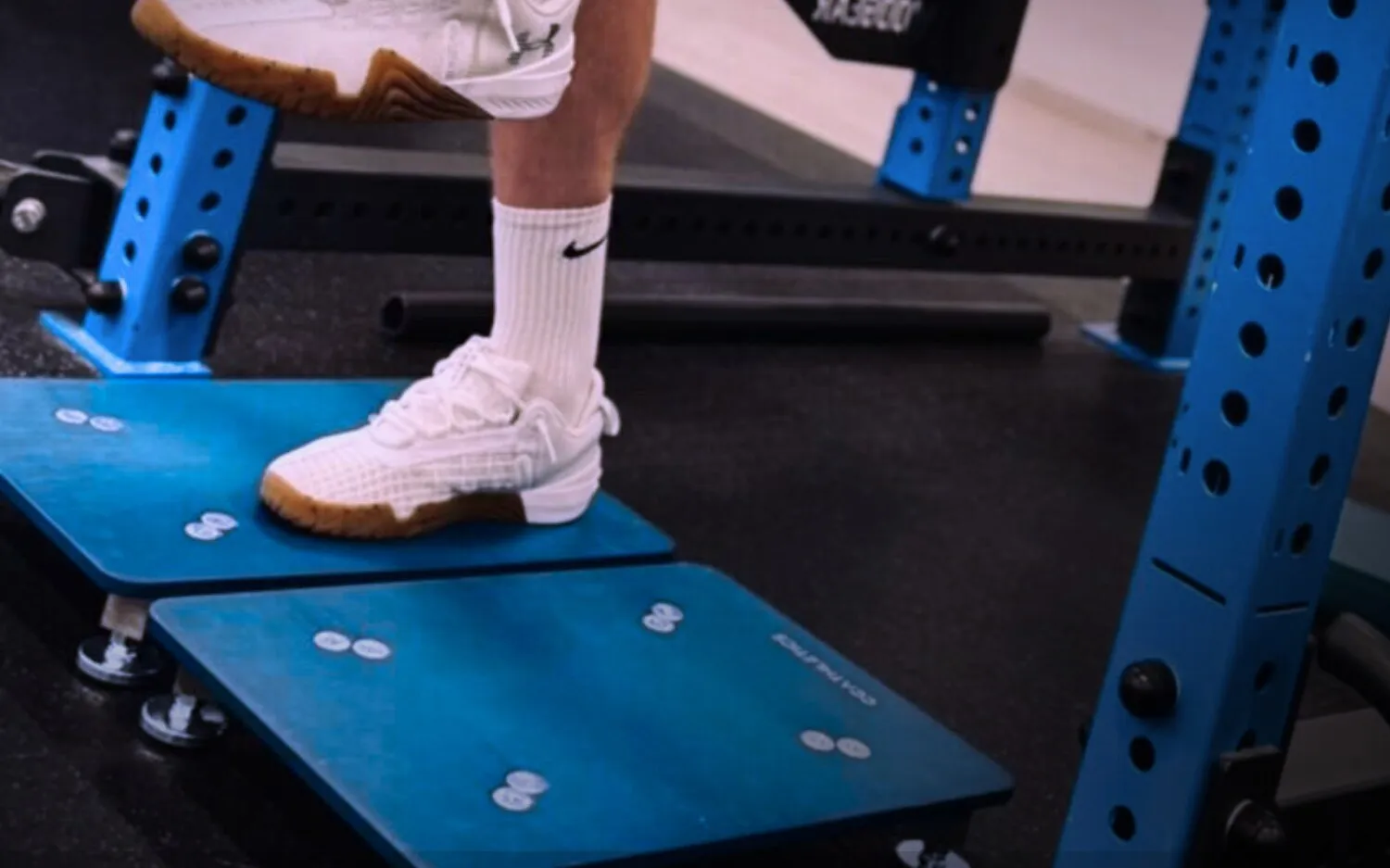
Force plate testing measures the force an athlete applies to the ground (the ground reaction force) as they jump, land, push or stand, and turns it into objective numbers about how they produce and absorb that force. It has become a standard tool in sport and rehabilitation because it reveals how a movement is performed, not just the outcome: the power, left–right asymmetry and day-to-day readiness that the eye and a tape measure miss.
For the deeper mechanics (how a plate works and the metrics in detail), see our force plate basics guide.
What is force plate testing?
A force plate is a precise, fast instrument that records the force pressing down on it hundreds of times a second, producing a force-time curve for whatever the athlete does on it. Force plate testing is the practice of using that curve to assess an athlete: how much force they produce, how quickly, how evenly between limbs, and how it changes over time. Stand still and the plate reads bodyweight; jump, land or pull and the rising and falling force tells the story of the movement.
What does force plate testing measure?
From the force-time curve, the software derives the metrics that matter: peak force (strength), rate of force development (how fast force is produced), jump height and power (explosiveness), left–right asymmetry, and balance (centre of pressure). You don’t need all of them; a few reliable numbers cover most decisions. Our force plate basics guide walks through the full metric set and how to read each one.
Who uses force plate testing?
- Strength & conditioning and performance. Profile power and explosiveness, screen left–right asymmetries before they become problems, and monitor readiness and fatigue across a training block.
- Physiotherapy and rehabilitation. Support return-to-play decisions with objective limb-symmetry data, and track both limbs through recovery, replacing a calendar date with evidence the injured side is ready.
- Research. Quantify neuromuscular performance reliably enough to publish, without a lab full of equipment.
The main force plate tests
Most force plate testing is built on a handful of tests, each exposing a different quality:
- Countermovement jump (CMJ): lower-body explosive power and neuromuscular readiness; the single most widely used test.
- Drop jump and RSI: reactive strength, how quickly an athlete turns a landing back into a take-off.
- Isometric mid-thigh pull (IMTP): maximal strength, measured safely and with almost no fatigue.
- Athletic Shoulder (ASH) test: isometric shoulder strength for overhead and contact athletes; the upper-body test on the plates.
- Balance, repeated hops, general movement, and more. See the full Test Library for every test type and how to run it.
Getting started
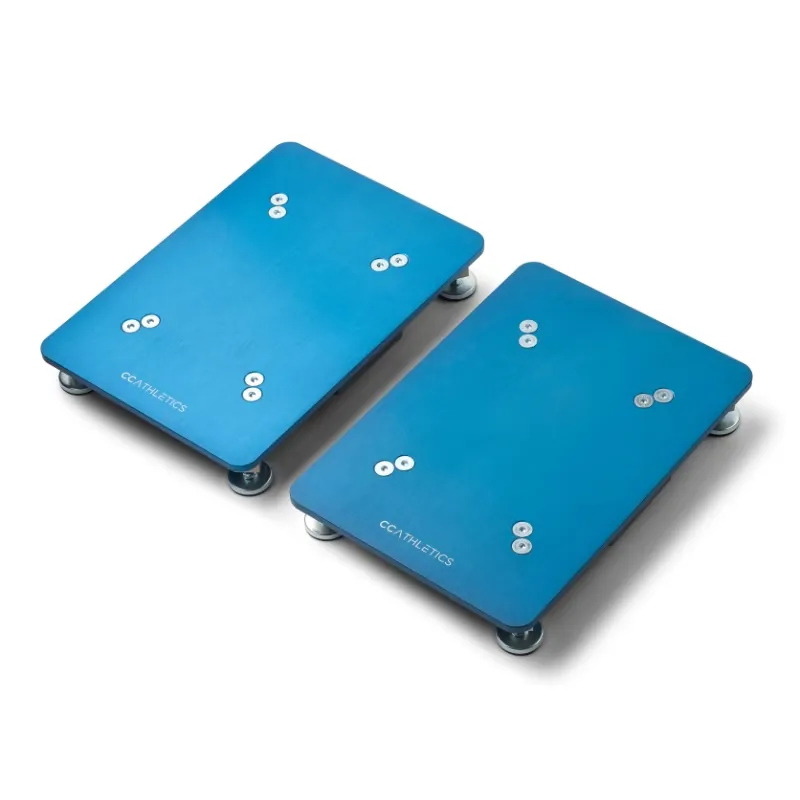
You don’t need a lab. A portable dual force plate like the PlateMate runs these tests in seconds, gives you power, asymmetry and the full force-time curve in ForceMate, and tracks every athlete’s trend over time. It’s the same lab-grade measurement, on a gym floor or in a clinic. See the validation studies for how it compares to reference systems, or start with the force plate basics guide to go a level deeper.
Want to see how force plate testing could fit your setup? Get in touch with the CC Athletics team.
Frequently asked questions
What is force plate testing?
Force plate testing uses a force plate (a precise instrument that measures the force pressing on it hundreds of times a second) to assess an athlete: how much force they produce, how quickly, how evenly between the two limbs, and how that changes over time. It is used across performance, rehabilitation and research to see how a movement is produced, not just its outcome.
Who uses force plate testing?
Strength and conditioning coaches (to profile power, screen asymmetry and monitor readiness), physiotherapists (for objective return-to-play and rehab tracking), and researchers (for reliable neuromuscular measurement). The same plates serve all three.
What tests can you do on a force plate?
Jumps (countermovement jump, drop jump, squat jump, rebound and repeated hops), isometric strength tests such as the mid-thigh pull, balance (centre-of-pressure) tests, and general movement. Each exposes a different quality, from explosive power to reactive strength to maximal strength.
Do you need a lab for force plate testing?
No. Portable dual force plates like the PlateMate bring lab-grade measurement to a gym floor, clinic or field, and set up in minutes, with no fixed rig or calibration ritual required.
Is force plate testing worth it?
Its value is objective, trackable data. A force plate shows how a movement is produced (power, left–right asymmetry, readiness), not just the outcome, so training and return-to-play decisions rest on evidence rather than the eye. Tracking an athlete against their own baseline is where most of that value comes from.
The product behind this article
PlateMate
Dual force plates with 4 000 kg max load and externally validated precision.
Explore PlateMate →