
The Athletic Shoulder (ASH) test, explained
The Athletic Shoulder (ASH) test measures shoulder strength on a force plate in three positions. Here's what it is, what it measures, and how to run it.
Published July 29, 2026
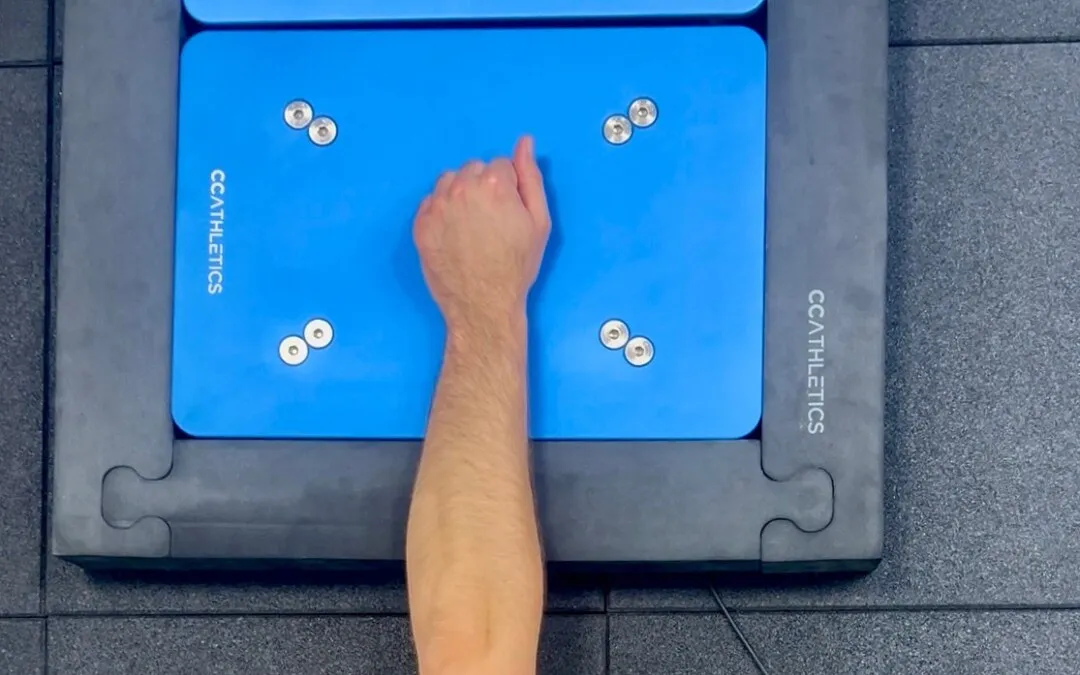
The Athletic Shoulder (ASH) test is a simple, objective way to measure shoulder strength: the athlete lies face-down with an arm extended onto a force plate and pushes down as hard as they can, in three positions. Developed by physiotherapist Ben Ashworth in 2018, it has become a standard test for upper-body strength and shoulder-injury screening, especially in throwing, overhead and contact sports.
It’s the upper-body counterpart to the lower-body tests in force plate testing, and it runs on the same force plate.
What is the Athletic Shoulder (ASH) test?
The ASH test is a prone (face-down) isometric strength test. The athlete lies on the floor with the test arm fully extended and the palm resting on a force plate, then drives down into the plate with maximal effort. Because nothing moves, the effort is isometric: the muscles produce force without changing length, and the plate records exactly how much force the shoulder produces and how quickly. Keeping the hand vertically in line with the shoulder is what isolates the movement, so the number reflects shoulder strength rather than a push from elsewhere.
The three positions: I, Y and T
The test is done at three angles of shoulder abduction, each named for the shape the arm makes with the body:
- I: 180°, arm straight overhead.
- Y: 135°, arm on a diagonal.
- T: 90°, arm straight out to the side.
Each position loads the shoulder girdle differently, so running all three profiles strength across the range instead of at a single angle. Test both the dominant and non-dominant arm, not just the throwing side, so you can compare left against right.
What does the ASH test measure?
A force plate turns each push into a force-time curve, and from it a handful of metrics:
| Metric | What it tells you |
|---|---|
| Peak force | Maximal shoulder strength in that position, the headline number |
| Relative peak force | Force per kilo of bodyweight, a fairer comparison between athletes |
| Rate of force development (RFD) | How quickly force is produced |
| Left–right asymmetry | The difference between the two arms, a screening and return-to-play flag |
Who uses the ASH test?
It’s most valuable where shoulder load is high: overhead and throwing athletes (baseball and softball pitchers, volleyball and racquet-sport players) and contact athletes (it was developed and validated in elite rugby). Typical uses are pre-season baselines, shoulder-injury screening, monitoring how well an athlete is tolerating training load, and return-to-play clearance after a shoulder injury.
How to perform the ASH test on a PlateMate
The ASH test needs a force plate on the floor, which is exactly what a portable plate like the PlateMate is. Recent published research has run the test on portable force plates just like it. The protocol is straightforward:
- Place a plate on the floor and lie prone, the test arm extended, palm on the plate, with the hand vertically in line with the shoulder.
- Set the position: I (180°), Y (135°) or T (90°) of shoulder abduction.
- On the command, push down into the plate as hard as possible and hold for about three seconds.
- Take around three trials per position, with roughly 30 seconds of rest between them.
- Test both arms, so you can compare the dominant and non-dominant side.
- Read peak force and RFD for each arm in ForceMate, then compare the two sides for left–right asymmetry, and save the results so they join the athlete’s trend over time.
What’s a good score?
The ASH test is still an emerging tool, so published “good score” norms are limited and vary widely by sport, sex and playing position. Two things tell you more than any table:
- Left–right symmetry. A meaningful gap between the two arms is a flag, both for injury risk and as a return-to-play criterion after a shoulder problem.
- The within-athlete trend. A drop in a thrower’s shoulder force, or a widening asymmetry across a season, is far more actionable than where they sit against a general population.
Where the PlateMate fits
The PlateMate is a portable dual force plate that runs the ASH test in seconds: peak force, RFD and per-arm asymmetry in ForceMate, tracked over time. The same plates you use for the countermovement jump and the isometric mid-thigh pull extend straight to upper-body screening, so one kit covers lower- and upper-body strength. See the validation studies for how it compares to reference force plates.
Getting started
If shoulder screening is new to your setup, baseline every athlete pre-season across the I, Y and T positions, both arms, recorded consistently. Then re-test on a regular schedule and watch for two signals: a drop against an athlete’s own baseline, and a growing left–right asymmetry. Caught early, those are what make objective shoulder testing worth adding.
Want to see how the PlateMate handles upper-body testing in your setting? Get in touch with the CC Athletics team.
Frequently asked questions
What is the Athletic Shoulder (ASH) test?
The Athletic Shoulder (ASH) test is a prone, isometric shoulder-strength test done on a force plate. The athlete lies face-down with the test arm extended and the hand on the plate, then pushes down as hard as possible in three arm positions. Developed by physiotherapist Ben Ashworth in 2018, it gives an objective measure of upper-body strength and asymmetry.
What are the I, Y and T positions in the ASH test?
They are three angles of shoulder abduction, named for the shape the arm makes: I is 180° (arm straight overhead), Y is 135° (a diagonal), and T is 90° (arm straight out to the side). Each position loads the shoulder girdle differently, so testing all three profiles strength across the range rather than at a single angle.
What does the ASH test measure?
Peak force is the headline, the most force produced in the push. From the same force-time curve you also get relative peak force (per kilo), rate of force development, force drop-off across the hold, and left–right asymmetry between the two arms.
Who is the ASH test for?
Mainly overhead and throwing athletes (baseball and softball pitchers, volleyball and racquet-sport players) and contact athletes; it was developed and validated in elite rugby. It is used for pre-season baselines, shoulder-injury screening, load-tolerance monitoring, and return-to-play clearance.
How do you perform the ASH test?
Lie prone with the arm extended and the hand on a force plate, in line with the shoulder. Set the I, Y or T position, then push down maximally for about three seconds. Take around three trials per position with rest between them, and test both arms, not just the dominant one, so you can compare.
Is the ASH test reliable?
Yes. The original 2018 study in elite rugby players found it very reliable with low day-to-day error, and force plates give objective, repeatable force data. Normative data is still limited, so it is best used to track an athlete against their own baseline rather than against a population table.
The product behind this article
PlateMate
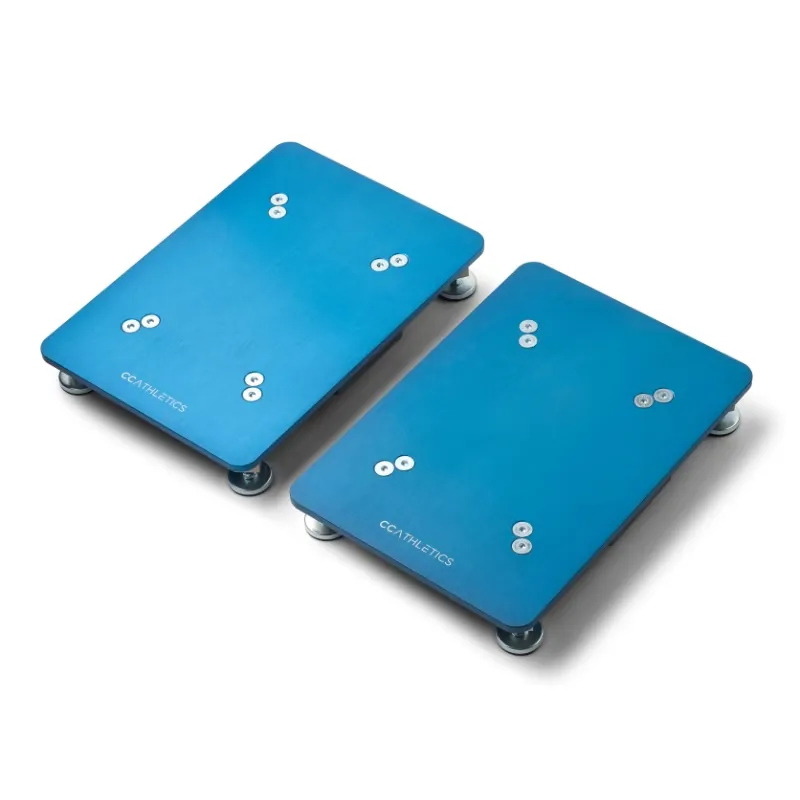
Dual force plates with 4 000 kg max load and externally validated precision.
Explore PlateMate →