
August 1, 2026 · 8 min read
How much do force plates cost?
Force plate prices range from around €2,500 for budget dual plates to €30,000+ for lab systems. What drives the price, the pricing models to compare, and what to budget.
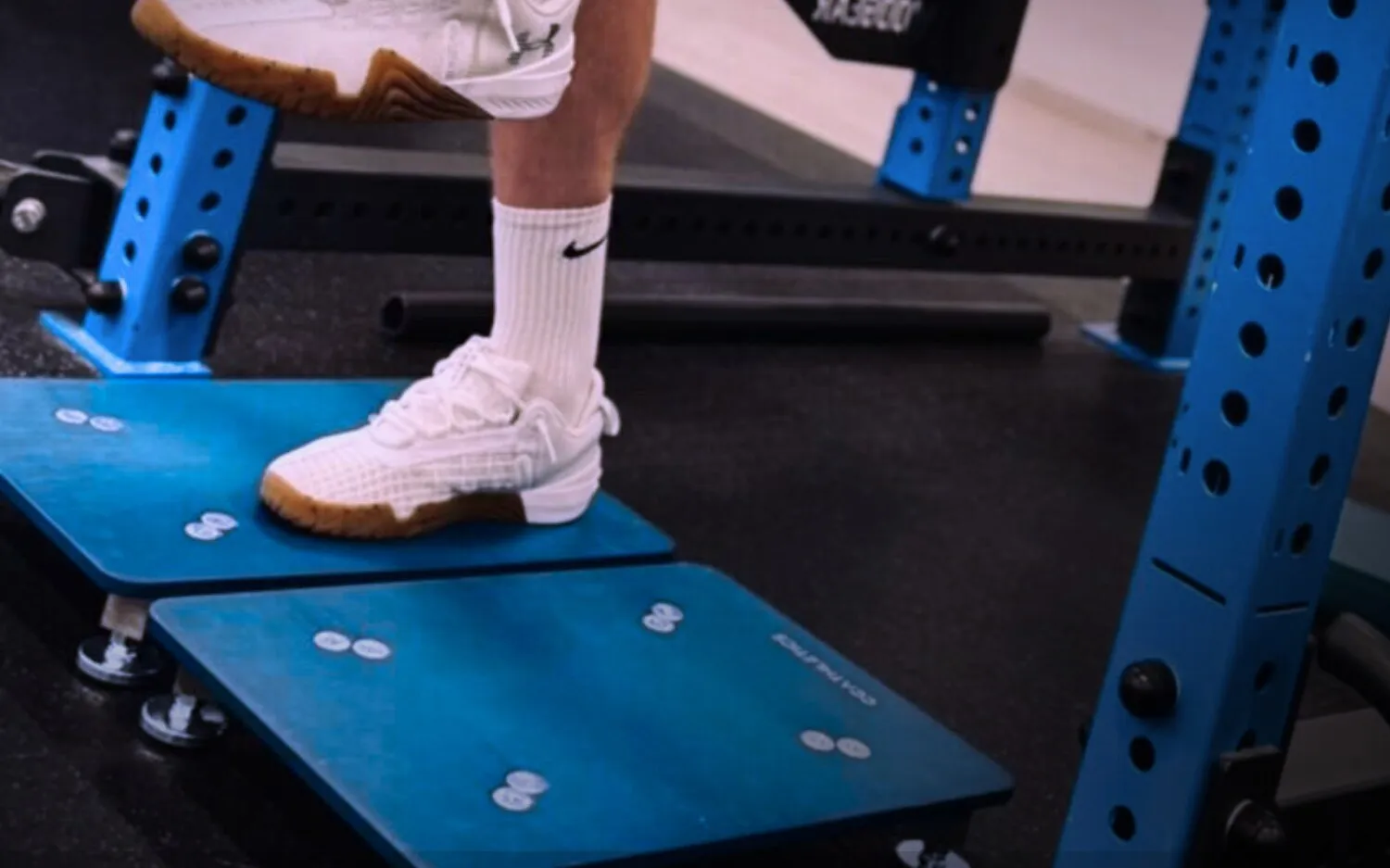
Force plates cost from around €2,500 for budget dual plates to €30,000+ for lab-grade in-ground systems. Most professional portable systems fall between €4,000 and €15,000. Many vendors don’t publish a price and put it behind a “book a demo” button, which makes budgeting hard. This guide gives the actual numbers, what drives them, and the questions that decide what a system costs over its lifetime.
The short answer
Force plates fall into three categories, with large price differences between them:
| System type | Typical price | Pricing model | Example system |
|---|---|---|---|
| Budget dual force plates | €2,500–€3,000 | One-time + freemium features | — |
| Professional portable dual systems | €4,000–€15,000 | One-time purchase or annual subscription | PlateMate (CC Athletics) — €4,220 ex. VAT, one-time purchase, no subscriptionone-time purchase, no subscription; priced via your regional distributor |
| Lab-grade in-ground plates | €10,000–€30,000+ per plate | One-time, plus amplifiers and software | — |
For most coaches, physios and clinics, the professional portable category is the relevant one: a dual system that measures each leg separately, runs the standard tests (countermovement jump, drop jump, isometric mid-thigh pull), and travels in a bag. The budget tier below it is newer; it’s worth understanding before you choose either, which we cover below.
What drives the price
Four things separate a €2,500 plate from a €20,000 one:
- Measurement hardware. Professional plates sample force hundreds to thousands of times per second, through load cells that stay accurate under repeated impact and a plate stiff enough not to flex and distort the reading. This is the core cost.
- One plate or two. Dual systems measure each limb independently, which is essential for asymmetry screening and return-to-play work. Two plates roughly double the hardware.
- Software. The plate produces a force-time curve; the software turns it into metrics, trends and reports. Much of the price is software development, whatever the pricing model.
- Validation and support. Systems backed by published validation and real support cost more to build. They are also worth more, because unverified numbers are worse than no numbers.
For what those metrics are and why they matter, see our force plate basics guide.
Before you compare prices: three fit questions
A price is only high or low relative to what you need. Three questions narrow the field:
- Who are you testing? Heavier, more explosive athletes need headroom on load capacity, and everyone needs enough plate surface. A plate much smaller than the movement invites edge landings that corrupt jump data.
- Which tests? Jumps and isometric strength run on any decent dual system. Balance testing needs centre-of-pressure measurement, which not every plate supports, so check before you buy.
- Where will you test? A fixed room tolerates anything. If you travel between a clinic, a gym and a pitch, weight, carrying cases and wireless connectivity matter daily.
One mistake wastes the most money: buying lab-grade embedded plates “to be safe”. Unless you do research-grade gait analysis, a portable dual system runs the entire standard testing battery. The extra €15,000 buys capability most practices never use.
Are cheap force plates worth it?
A newer tier of dual force plates has appeared around the €2,500–€3,000 mark. Whether they are worth it depends on what you need the numbers for. The gap to professional systems is real, and it is usually less about the plate than the software around it: a few headline metrics per test instead of a full breakdown, and little or no longitudinal reporting to track an athlete across a season or a squad across a roster.
If you occasionally want a jump height, a budget plate can be a fine step up from a phone app or jump mat. Still check the accuracy claims: some budget vendors now publish validation data, and it is worth reading what it was validated against and for which movements. But a trustworthy number is the entry ticket, not the product. If you make return-to-play calls, screen asymmetries or monitor a squad over time, the deciding question is the software you will use every day: how many metrics per test, how it compares left to right, and what longitudinal history it keeps.
One-time purchase vs subscription
This matters more than the sticker price. The market splits into two models:
- Subscription: lower entry cost, but an annual software fee, and the system stops working when you stop paying. At €3,000 per year, that is €15,000 over five years, and you own nothing at the end.
- One-time purchase: a higher upfront price, but the plates and software are yours. Five years later the cost per year has fallen to a fifth; ten years later, a tenth.
There is also a difference in effort: a subscription or lease puts you back in the buying process every one to three years, at whatever the renewal price is then. Ownership makes the decision once.
Dr. Jack Eoin Rua O’Neill, who runs Rua Laboratories and used VALD throughout his PhD, put it this way when choosing plates for his own practice:
“VALD Performance is often what people think of first, and it is also what I used during my PhD, but I personally had no interest in buying into a subscription model where I would never actually own my plates.”
Neither model is dishonest, but they are not comparable on the first-year number alone. Put quotes side by side over a five-year horizon; the ranking usually changes.
Why many vendors hide their prices
Quote-only pricing lets a vendor set the number per buyer, which is good for the vendor and bad for you. We publish ours instead.
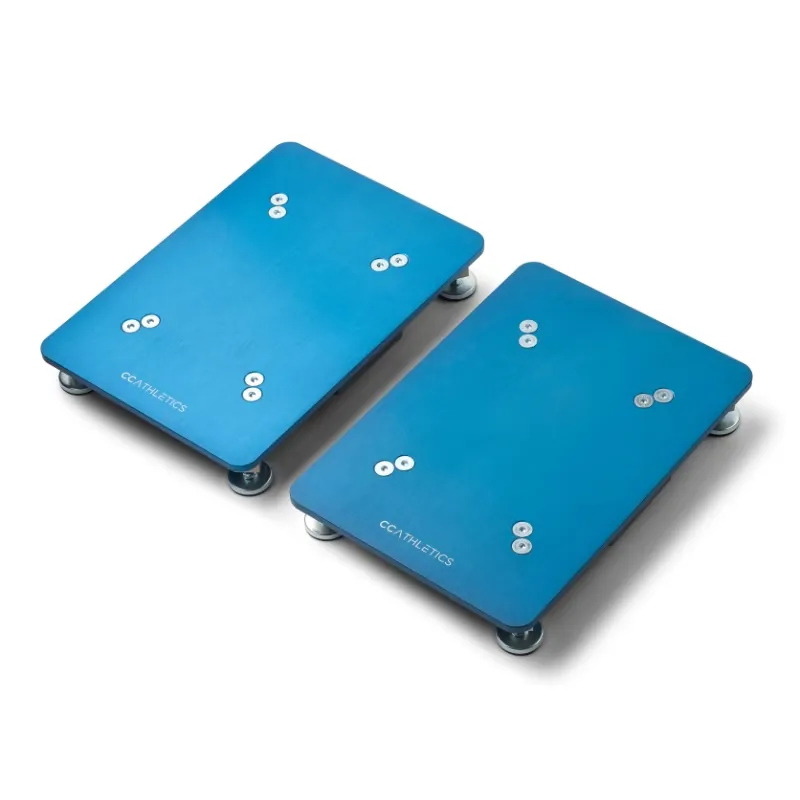
The PlateMate is a portable dual force plate system with left/right measurement, 960 Hz sampling and the software included for life. It costs €4,220 ex. VAT (about $5,000) as a one-time purchase, with no annual fee and no per-athlete charge; updates to the included software are free for life. Full pricing for the complete range, including bundles, is on the shop page.
Pricing in your region is handled by our authorized distributor. See the details in the notice on this page.
For comparison, there is a spec-by-spec comparison against ForceDecks Lite and Hawkin Dynamics covering sizes, sampling rates, metric counts and subscription totals, plus raw-signal comparisons against lab-grade Bertec plates and VALD ForceDecks.
When does it pay for itself?
Force plate testing is a billable service, which most price guides skip. Physio clinics and performance centres commonly charge €150–€300 per assessment session, depending on depth and reporting. At those rates, a professional portable dual system covers its cost in roughly 15–30 sessions. For a practice that tests weekly, that is months, not years. Rua Laboratories brought around 200 athletes through in its first year on a single PlateMate system.
If you work with a team rather than paying clients, the return is different: better readiness calls, asymmetry screens and return-to-play decisions, made with evidence instead of instinct. Harder to invoice, but it is why elite clubs test.
Either way, the pricing model decides how long the payback lasts: with a one-time purchase, every session after break-even is yours; with a subscription, the annual fee continues.
Hidden costs to ask about
Get written answers to these before comparing prices:
- Is the software included, and for how long? Some quotes cover hardware only, with the analysis software as a separate annual line.
- What happens if you stop paying? On some subscription systems, lapsing means losing access to your own historical data.
- Are there per-athlete or per-seat charges? A price that scales with your roster is a very different price.
- What do accessories cost? Carrying cases, frames and attachments for isometric testing are sometimes quoted separately.
- What does the warranty cover? Force plates take repeated impact; ask about the load cells specifically.
Where to buy force plates
Professional systems are sold direct by the manufacturer or through authorized distributors; there is no meaningful retail channel. Buying used is possible but risky: you inherit unknown impact history on the load cells, and subscription-model plates may be worthless without a transferable software agreement. If you buy second-hand, confirm with the manufacturer that the software licence follows the hardware before paying.
If you are ready to compare specific systems, shortlist two or three, ask each vendor the five questions above, and ask each for validation data against a lab-grade reference. The vendors with good answers will not mind the questions.
Frequently asked questions
How much do force plates cost?
It depends on the category. Budget dual plates run €2,500–€3,000. Portable dual force plate systems for professional use typically cost €4,000–€15,000 as a one-time purchase, or several thousand euros per year on a subscription. The CC Athletics PlateMate, for example, is €4,220 ex. VAT as a one-time purchase, with the software included for life and no subscription. Lab-grade in-ground plates cost €10,000–€30,000+ per plate before amplifiers and software.
Why are force plates so expensive?
A professional force plate needs high-quality load cells and a thick, machined metal plate that stays rigid under load. Those are real material and manufacturing costs, and unlike electronics they don't fall much over time. Add the software that turns the raw signal into useful metrics, and there is a limit to how cheap a professional-grade system can get.
Do force plates have subscription fees?
Often, yes. Many vendors charge an annual software subscription on top of, or instead of, a hardware price, and the system stops working if you stop paying. Others, including CC Athletics, sell the hardware once with the software included for life. Always ask which model you are being quoted before comparing prices.
Can I buy force plates for a home gym or small clinic?
Yes. Portable dual force plate systems set up in minutes on any solid, flat floor and need no lab, fixed rig or installation. That puts professional-grade testing within reach of physio clinics, gyms and individual practitioners, not just universities and elite clubs.
How much does force plate testing cost as a service?
Physio clinics and performance centres typically charge €150–€300 (roughly $150–$300) per force plate assessment session, depending on the depth of testing and reporting. For practitioners who test regularly, those session rates are why owning a system usually pays for itself within months.
Are cheap force plates accurate?
Not automatically. Accuracy depends on the load cells, the sampling rate and the software's movement detection, not the price. Before buying, ask the vendor for validation data. Raw-signal comparisons against a lab-grade reference plate are the strongest evidence that a lower-cost system measures what it claims to.
The product behind this article
PlateMate
Dual force plates with 4 000 kg max load and externally validated precision.
Explore PlateMate →